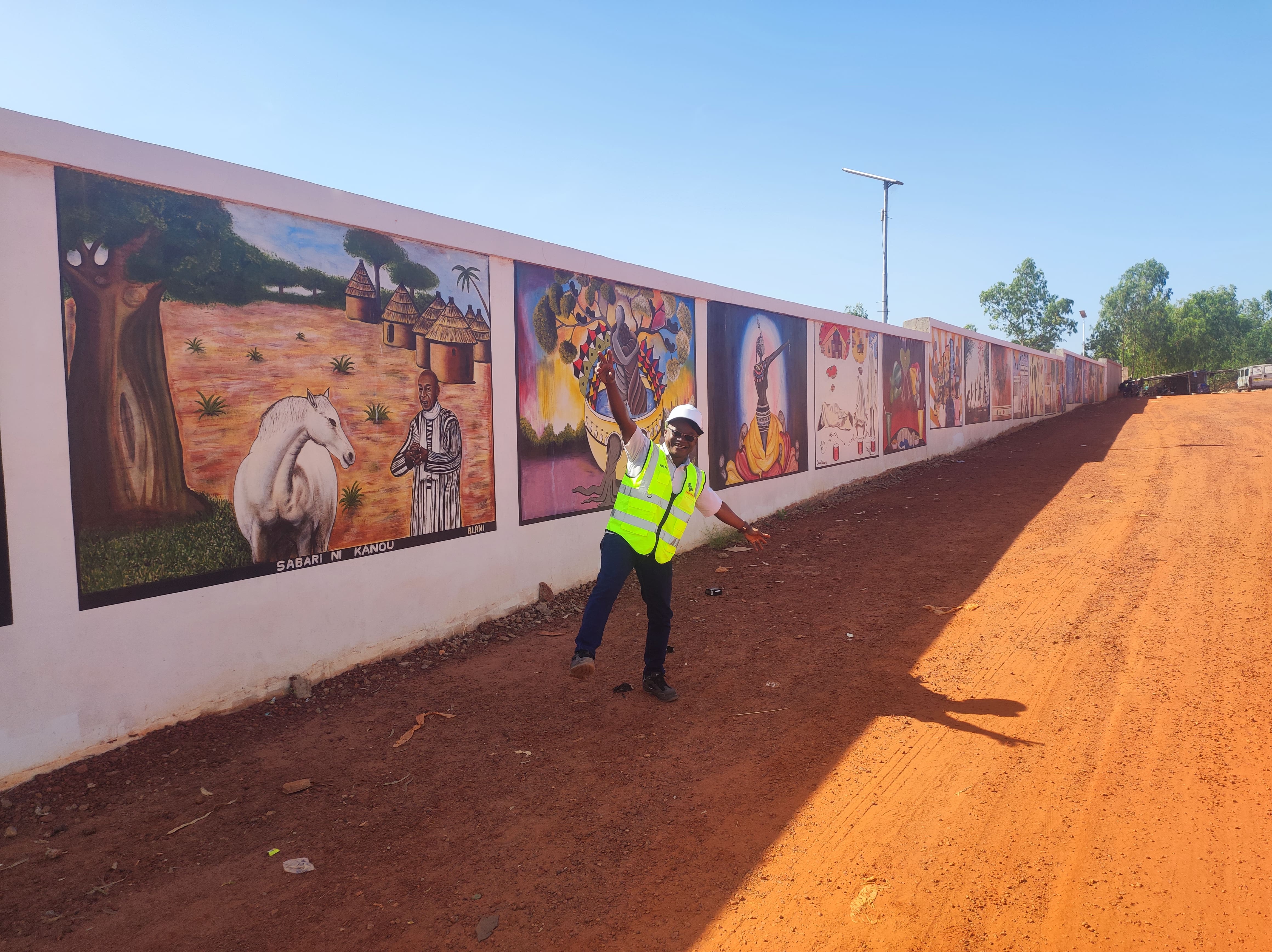
Every quarter, SIDI publishes an article highlighting a field mission carried out by one of its partnership officers. Today, SIDI shares the account of Jacques Afetor, SIDI’s West Africa partnership officer since 2023, based in Lomé, Togo. These field visits are key opportunities to gain an insight into local realities, assess the challenges faced by stakeholders, and discuss future prospects. They also provide an opportunity to share our partners’ achievements more widely.
I am fortunate to be very familiar with the microfinance sector in West Africa, since before joining SIDI, I worked for more than ten years at Assilassimé, a social microfinance institution that partners with SIDI. Being in the role of a funder adds a new dimension, offering the opportunity to support not only the growth of our partner microfinance institutions but also that of agricultural entities involved in various value chains across the subregion.
Given the security situation and the information provided by the Ministry of Foreign Affairs, which advises against all travel, my departure for a mission to Burkina Faso remained quite uncertain.
However, discussions with my contacts on the ground provided a more accurate picture of the actual situation in the country, which made it easier to plan the mission and take appropriate measures to mitigate risks.
Burkina Faso: The Land of Honest Men Faces Several Challenges
Before I tell you about the visits we made to our partners, I think it’s important to provide some background on the situation in Burkina Faso. The country has faced a particularly tense security and political climate in recent years. Although an improvement was observed in 2025 in the capital and the southwestern part of the country, the situation remains very fragile.
In 2023, more than 40% of the population lives below the poverty line, according to the World Bank. Burkina Faso ranks 186th out of 193 countries on the United Nations Development Program’s Human Development Index (HDI). Investors remain few in number and out of reach for most microfinance institutions, such as the country’s small agricultural cooperatives.
More than two million people are either internally displaced or have sought refuge abroad, representing over 10 per cent of the population. Despite this situation, SIDI remains committed to its mission of supporting the development of income-generating activities for those who need them most.
Getting to know ACEP: the Credit Agency for Private Enterprise in Burkina Faso
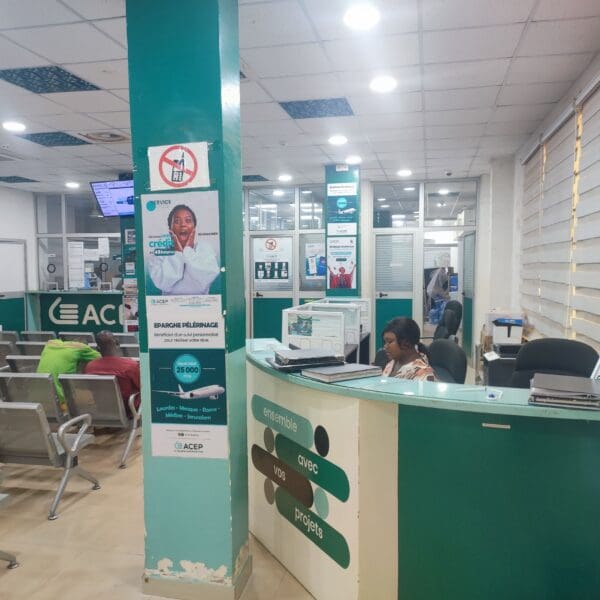
I began my series of visits with ACEP Burkina, whose head office is in Ouagadougou, and two of its 14 branches based in Bobo Dioulasso, in the west of the country. The institution’s core business is providing finance to micro and small enterprises, which are generally overlooked by banks.
ACEP Burkina Faso has been a partner of SIDI since 2021. SIDI also acquired a stake in ACEP in 2022, confirming its commitment to strengthening this partnership and providing the best possible support for the microfinance institution’s strategic decisions.
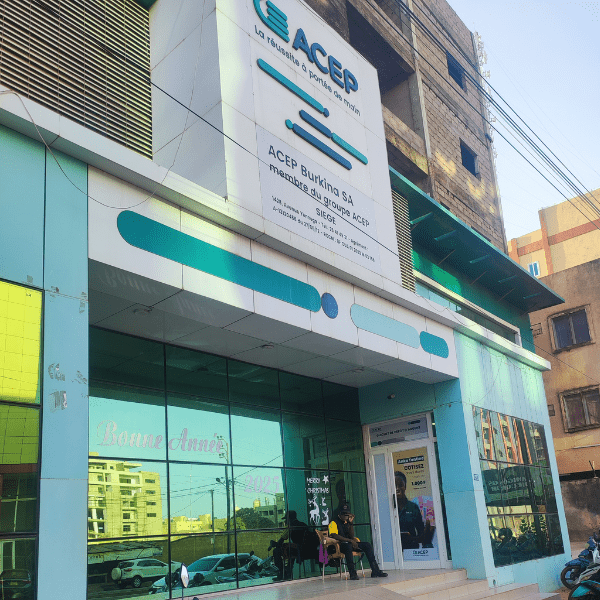
ACEP is facing cash flow difficulties due to the scarcity of foreign investment in Burkina Faso, which has led to a slowdown in the development of its activities in 2025 compared with initial forecasts.
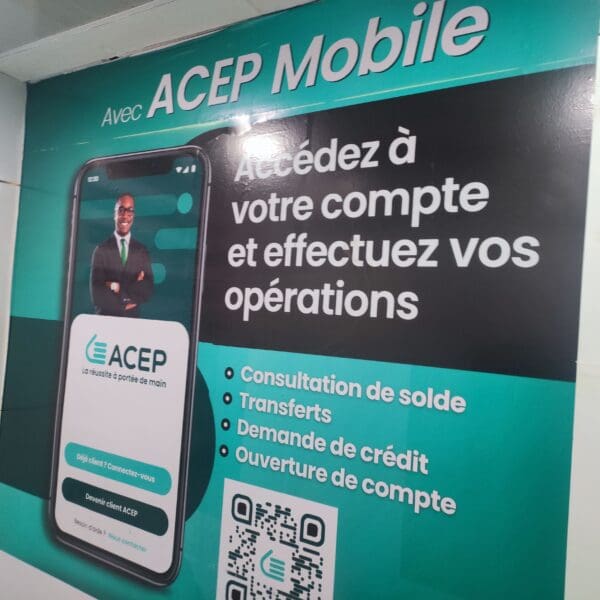
Lors de ma visite, j’ai néanmoins été impressionné par la résilience de notre partenaire qui a su développer de nouveaux produits financiers adaptés aux clients individuels et ainsi diversifier ses sources de revenus. En guise d’exemple, ACEP propose des solutions de crédit via le mobile ne nécessitant pas de garantie. Elle met aussi à disposition des automates de dépôt d’argent pour faciliter l’épargne à ses clients et a lancé le déploiement de son nouveau produit d’épargne tontine qui consiste à faire la collecte de la petite épargne régulière auprès de ses clients. Le leadership de l’équipe dirigeante, ainsi que la détermination et l’engagement du personnel, permettent à ACEP de conserver un ancrage solide dans le secteur de la microfinance au Burkina Faso, malgré un environnement particulièrement contraignant. Cette résilience motive en partie la SIDI à poursuivre son accompagnement via son fonds FEFISOL.
ACEP’s Environmental and Social Performance Management
Since my last visit less than two years ago, ACEP has strengthened its commitment to managing its social and environmental performance by appointing a dedicated officer to oversee these issues. It has also carried out an impact assessment in collaboration with the consultancy firm 60 decibels, which has enabled it to evaluate the effects of its financial services on its clients.
As such, 41 per cent of them say that their standard of living has improved thanks to the growth of their businesses, which has had a positive impact on their households, and 73 per cent of customers have taken out a loan for the first time.
I see this as a positive sign: these results confirm that ACEP’s strategy is aligned with SIDI’s mission, which prioritises communities excluded from conventional economic and financial systems, particularly rural communities, women and young people.
Furthermore, ACEP also does outstanding work in providing finance to stakeholders in local agricultural value chains, particularly SMEs operating in various sectors such as rice, cotton, cashew nuts, fruit and vegetables. By providing finance to these SMEs, ACEP indirectly reaches thousands of small-scale producers who help to strengthen food security for local communities.
Second stop on the tour of Gebana Faso: a 100% organic agricultural revolution supporting local communities
I had the opportunity to meet with the team at Gebana Faso, a company that specializes in processing cashews and dried mangoes. Gebana Faso has been a partner of SIDI since 2019. Our two organizations share strong values in support of environmentally friendly family farming that can strengthen the local economy by creating sustainable jobs in these regions.
Today, 100 per cent of production is certified organic. Gebana Faso sources its produce from several regions across the country, mainly from more than 5,000 family farmers organised into producer cooperatives.
The ‘Belle Usine’: the realisation of a major project
The construction of the Belle Usine, as I like to call it, was completed in early 2026 and I was lucky enough to be able to visit it: it will enable us to increase production capacity, boost the volume of produce processed (from 1,500 tonnes of raw nuts processed in the old factory to a capacity of 7,000 tonnes in the new one), create over 100 additional local jobs, whilst increasing the number of smallholder partner producers by more than 20 per cent. As for mango drying, there are 60 processors employing over 4,000 people. In 2026, this new factory will take on part of this activity, which is usually outsourced. In total, Gebana Faso’s operations generate income for over 1,000 households.
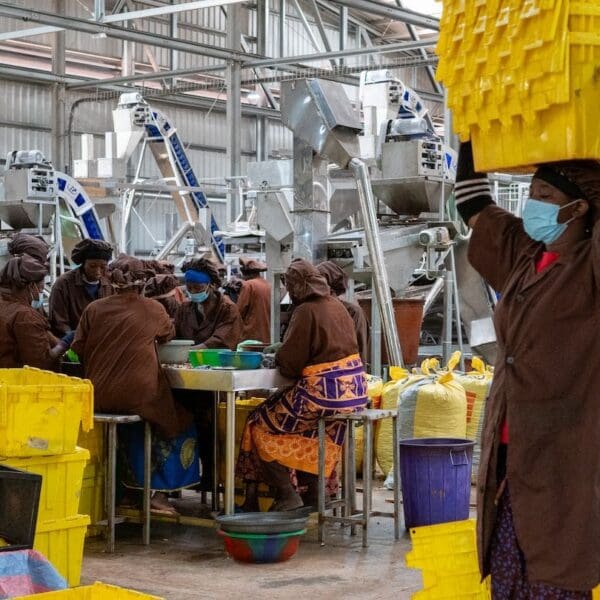
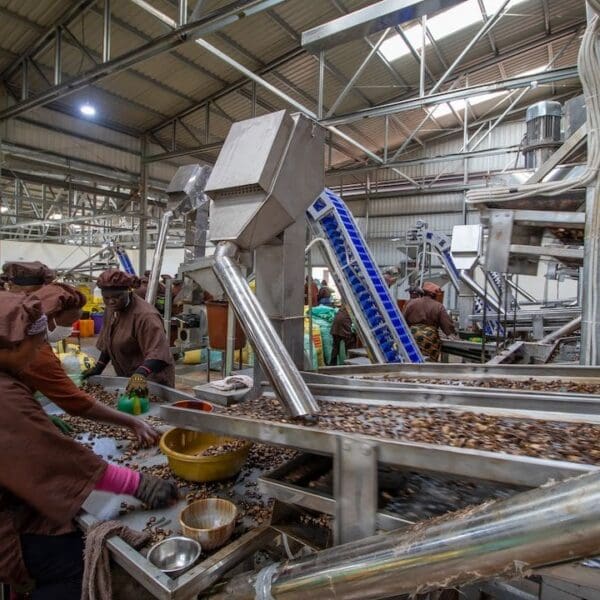
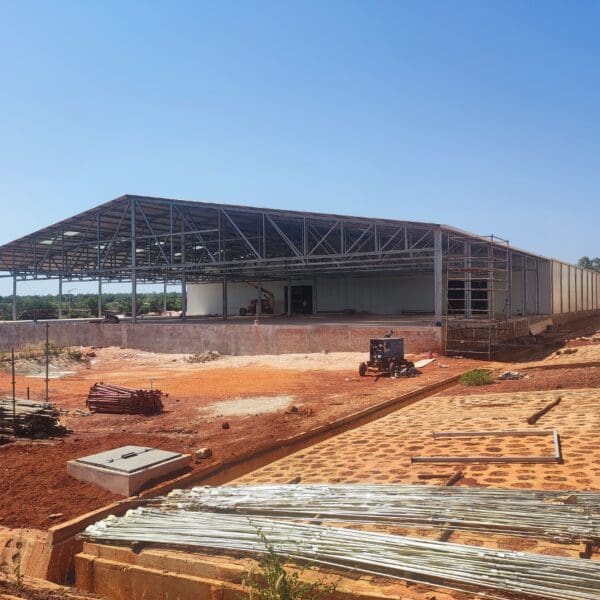
A fairer economic model for local producers and employees
Gebana Faso has successfully developed supply chains in which local producers play a key role. For example, they benefit from a number of financial incentives: a bonus of €15 per tonne sold, an impact bonus of €75, and a selling price to Gebana Faso that is 10 per cent higher than average market prices.
Gebana Faso’s employees enjoy social benefits and paid leave, and travel to the production site every day on special shuttle buses chartered from the town of Bobo Dioulasso, which is about twenty kilometres away.
Reducing the environmental and climate impact
- With its new factory, Gebana Faso will now be able to recycle all of its production waste (raw cashew nut shells and mango skins), which will be used to roast the nuts. This practice helps to significantly reduce air pollution, in particular by limiting CO₂ emissions.
- At the same time, Gebana Faso is setting up ‘field schools’ to train farmers in agroforestry practices – a method of farming that provides better soil protection and reduces the carbon footprint.
- A project to set up a composting centre for mango peelings is also currently being developed, with tests already yielding positive results.
- Training courses in agroecology are provided for farmers to offer them technical and operational support
Through its activities, Gebana Faso demonstrates that it is possible to develop an agricultural sector that is ambitious in economic, social and environmental terms, despite a challenging context.
Following this field visit and the various analyses carried out, it was decided to grant new loans totalling 1 million euros through the FEFISOL II fund to Gebana Faso and ACEP, making SIDI the sole foreign investor to commit to supporting them.
This is a mark of trust that is deeply rooted in SIDI’s DNA: to provide support by demonstrating flexibility, boldness and innovation, in order to stand by our partners despite the risks and the fragile circumstances in which they operate.
I have real hope for Burkina Faso and its people because there is a palpable sense of dynamism. When you meet people there, you really get a sense of the strong determination that exists to bring about change, to create value and to improve people’s living conditions.