 Back to all testimonials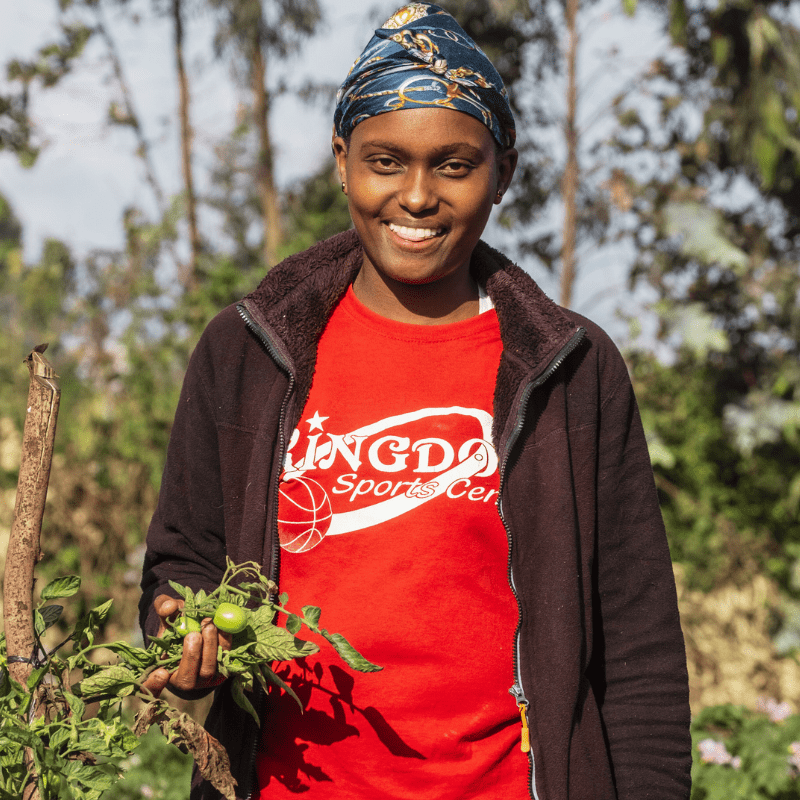
Rahab Waithira Njau is married and has two young children. She lives in Kiambu County, on the outskirts of Nairobi, the country’s capital. Her husband inherited their two plots of land: the one next to the house, where the cowshed and henhouse are located, and the other, dedicated to market gardening.
She starts her day by milking the cows, distributing grain to the hens and collecting eggs. She then heads out into the field for market gardening activities. She planted cabbages, spinach, potatoes, beans, broccoli, etc…
She enriches her crops with natural fertilizers made from the waste from her cows and chickens. She sells her vegetables to neighbors and shops in the surrounding villages.
Rahab Waithira Njau has been a Bimas customer for a year and has just paid off her first loan of 30,000 Kenyan shillings (around €200).
It was word-of-mouth that introduced her to the organization: one of her aunts has been a customer for several years. With the first loan, she bought more chickens and cattle feed. She plans to borrow again to buy cows and more land for market gardening.
Bimas is a microfinance institution based in Kenya. Historically, it was a development program of the international NGO PLAN, which was transformed in 1994 into a fully-fledged independent institution with a strong social approach. Bimas operates mainly in rural areas, facilitating access to finance with training that enables beneficiaries to make informed decisions on how best to use and develop their financial resources.