Replay the webinar presenting SIDI’s 2023 social and environmental report

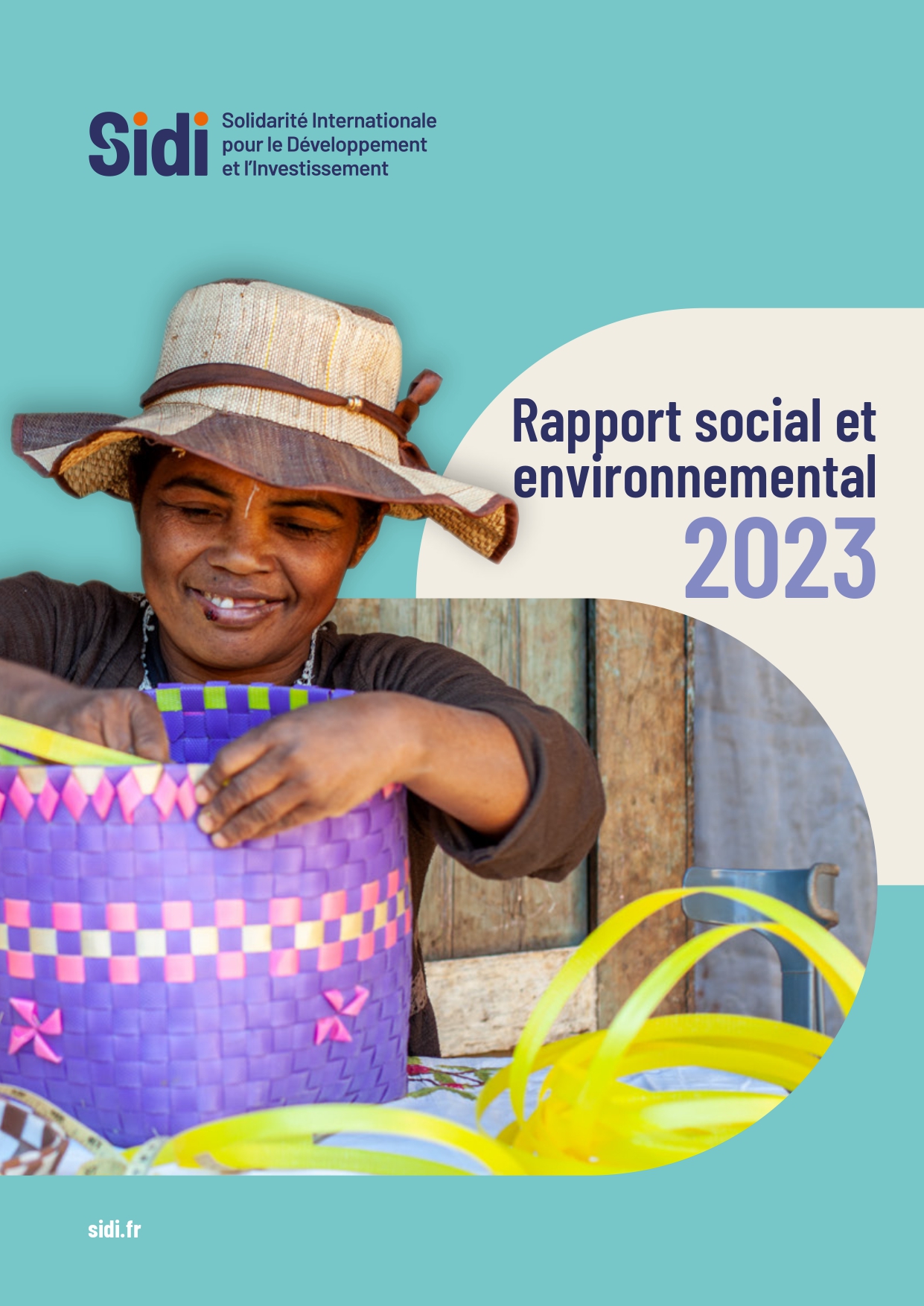
Couverture Rapport social et environnemental 2023

Watch the video of our webinar on our Youtube channel

The result of in-depth analysis by SIDI’s Social and Environmental Performance (SEP) team, the report presents the results of SIDI’s partners, their progress and their room for improvement in each of our major strategic areas: the reduction of economic inequalities, poverty reduction, adaptation and mitigation of climate change.

The quest foradditionality is the strategic compass for SIDI’s activities. To measure the impact of its activities, SIDI has for many years developed a highly effective system for measuring PES through the monitoring of precise indicators. The social and environmental report gives an account of this every year.

This webinar is an opportunity to deepen your understanding of SIDI’s mission and learn more about its partners, their achievements and the impact of their activities on the most vulnerable populations.

On the program:

➡️ Additionality at the heart of SIDI’s impact strategy

➡️ The results of SIDI’s partners in terms of:
– reduction of economic inequalities
– reduction of poverty
– adaptation to climate change

➡️ Focus on an impact study carried out with our partner Abakundakawa, a coffee cooperative in Rwanda

➡️ Question-and-answer session

With :

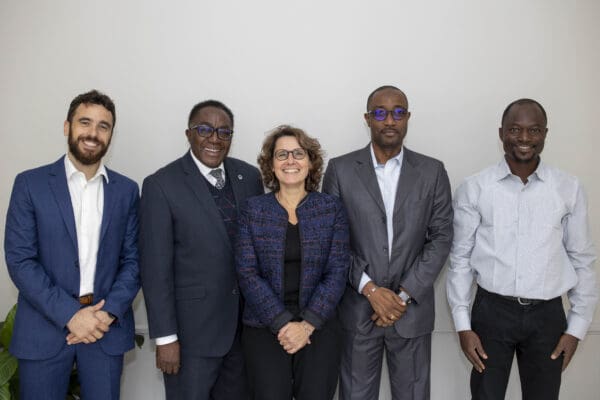
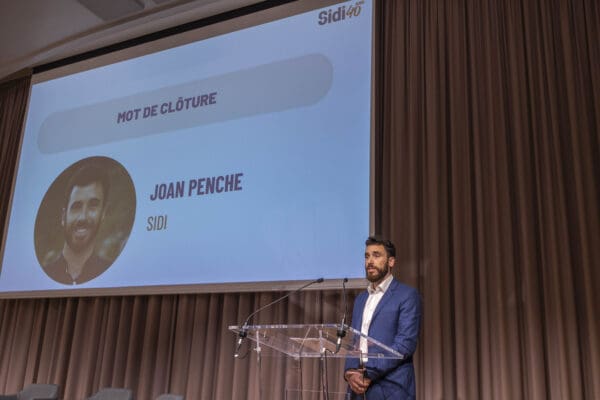
Joan Penche, Director of Partnerships and Operations
Jon Sallé, PSE Manager
Ariane Bévierre, PSE Officer

🔗 To see the webinar again: click here

A look back at SIDI’s 40th anniversary!

Sidi40ans

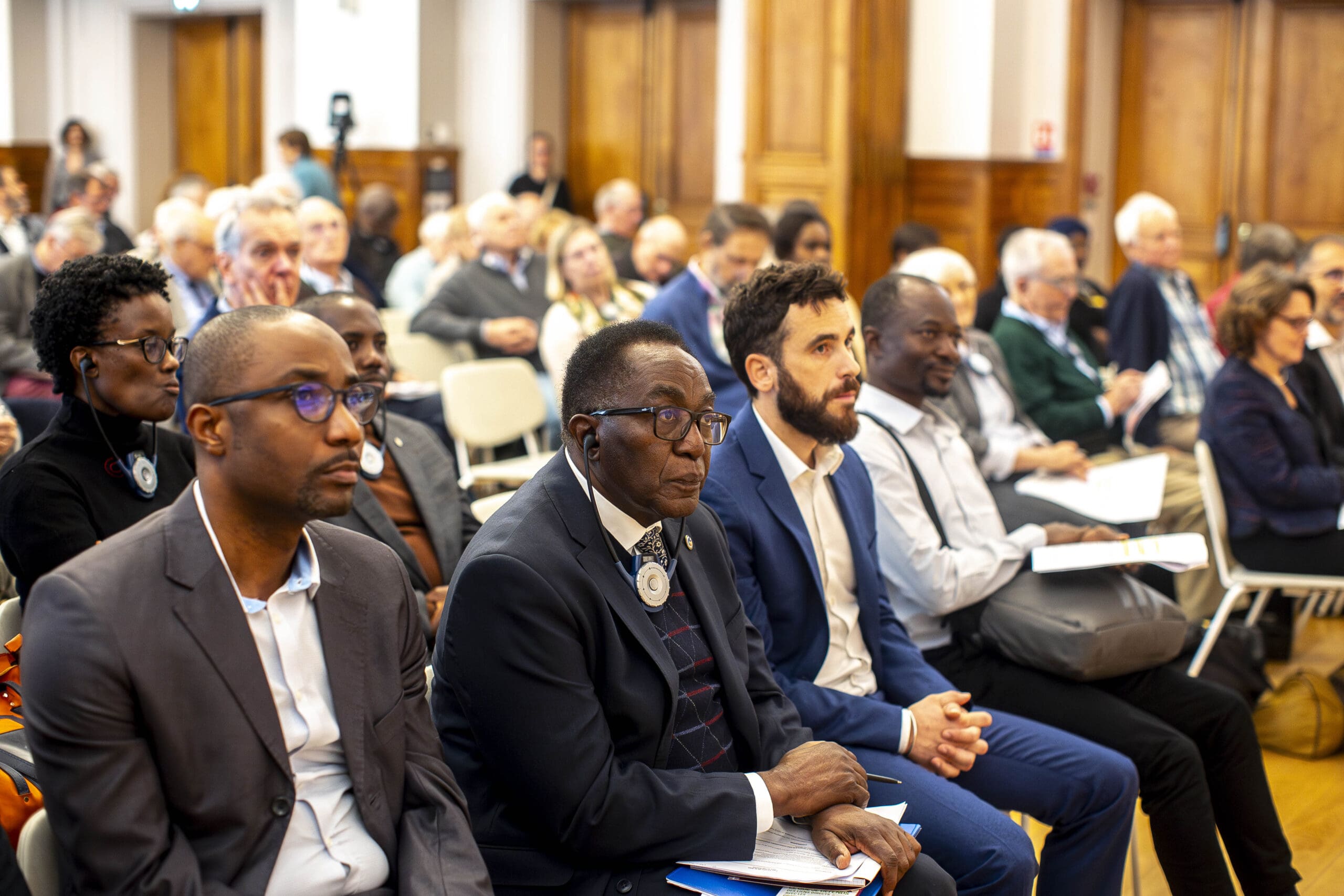
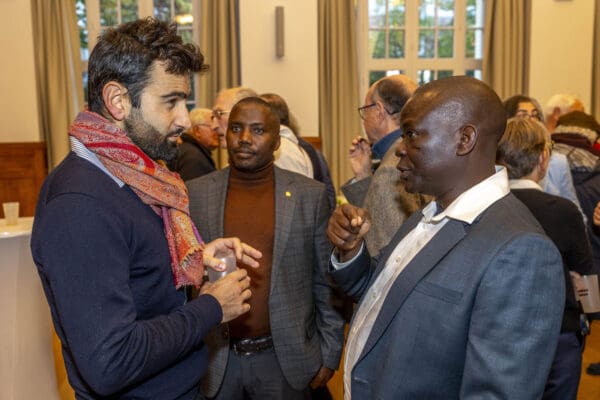
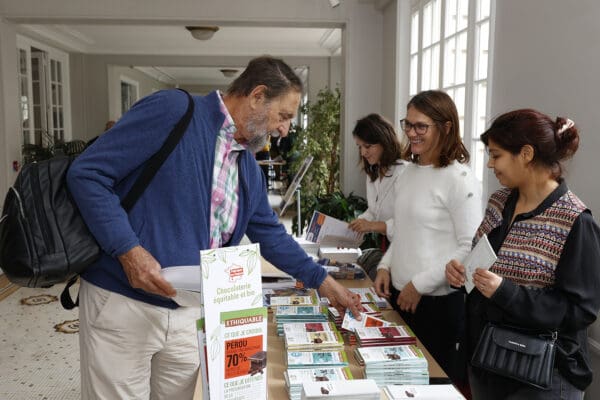
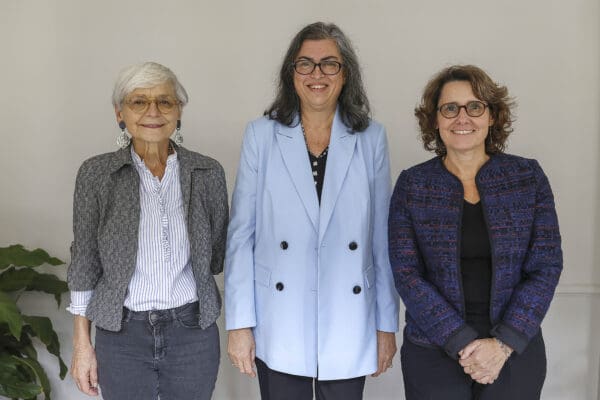
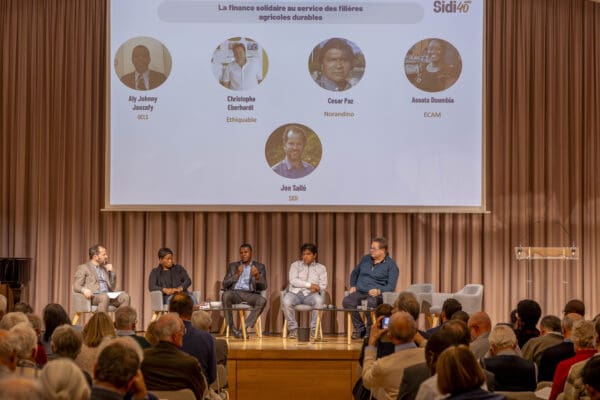
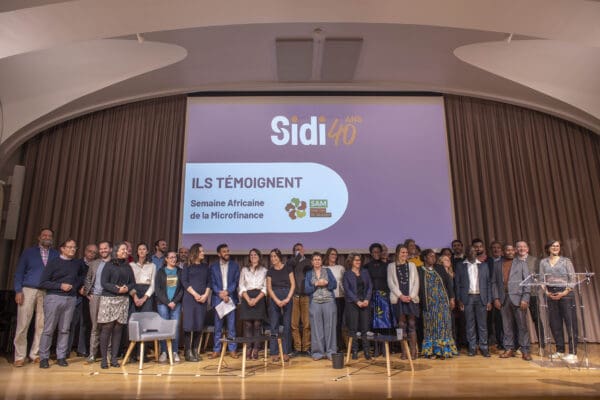
Over 200 people gathered on Thursday 9 November to celebrate SIDI's 40th anniversary!

An afternoon rich in exchanges, debates and personal accounts, which brought together SIDI partners, historic allies and shareholders: all committed to working alongside us towards the same vision: to make solidarity and patient finance a lever for the sustainable transformation of societies aiming for a fairer and more environmentally-friendly world.

40 years: a unique opportunity to look back at the history of SIDI, a pioneer in solidarity finance, and the major successes and challenges that have marked its path.

The President of CCFD-Terre Solidaire, Sylvie Bukhari de Pontual, opened the conference with a reminder of how 40 years ago, CCFD-Terre Solidaire assigned SIDI the mission of promoting the development of a social and solidarity economy using a highly original instrument at the time, solidarity finance. “Today, by its very example, SIDI shows that another economy, another form of finance, is possible, because the use of money – and not just its income – becomes a driving force for action in international solidarity and economic, social and environmental justice “.

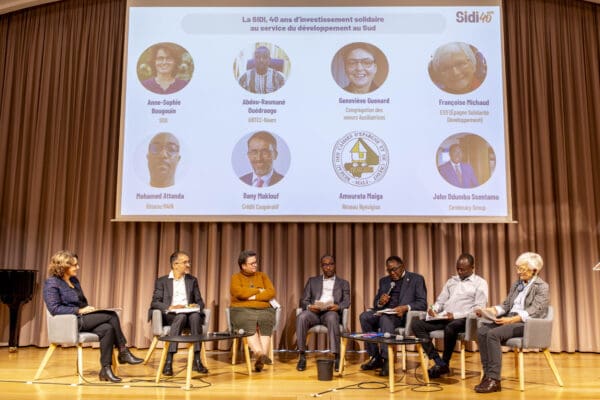
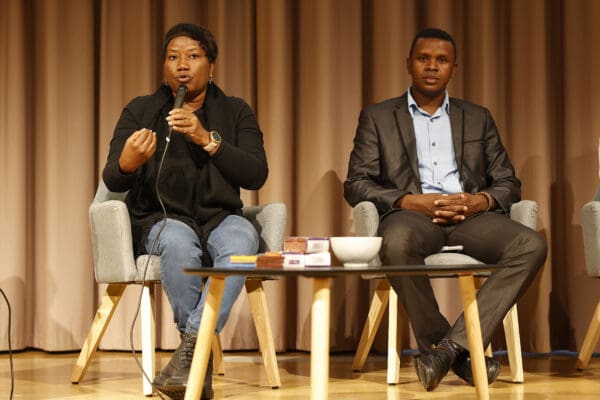
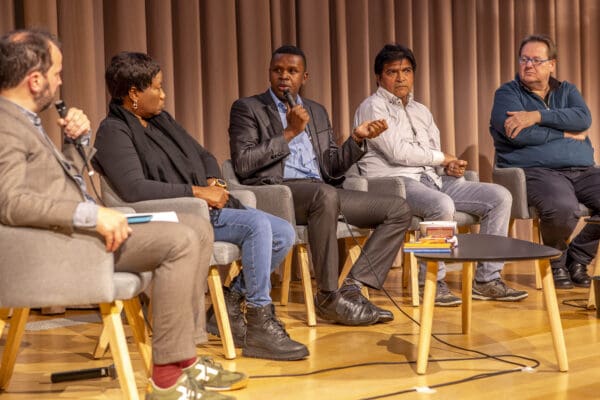
Two round-table discussions with SIDI’s local partners perfectly illustrated SIDI’s partnership approach: a partnership which takes several forms depending on the specific needs of each partner, and which is a long-term commitment. SIDI looks for ways of collaborating that are best suited to the needs and resources at its disposal: financing, but also active participation in governance, technical assistance and exchanges of experience. SIDI strives to remain close to its partners over the long term, even in the most difficult periods and contexts. ACAD-Finance’s first-hand account from Palestine highlighted the importance of this approach.

This long-term partnership is made possible by the nature of SIDI’s resources, mainly by the patient and supportive capital provided by 2,000 individual shareholders. Françoise Michaud, President of ESD (Epargne Solidarité Développement), SIDI’s shareholders’ association, reminded us of the strong commitment and motivation of our shareholders, who are looking above all for the social and environmental “dividends” resulting from the activities financed. Abdou-Rasmané Ouédraogo, CEO of UBTEC-Naam, a microfinance institution based in the north of Burkina-Faso, emphasized that the shareholders’ objective of making the world a more caring place through solidarity finance had been achieved, adding: ” and we ask them to continue their support for SIDI so that we can reach more vulnerable people”.

The panels, which also brought together strategic allies such as Crédit Coopératif and the Ethiquable cooperative, provided an opportunity to discuss crucial issues for our activity, such as: supporting structures to go further in terms of social performance, transparency and the challenges of ecological transition; creating added value and sharing it with producers; and creating guarantee funds for investments, given the risks associated with the countries and types of partners with which SIDI is involved.

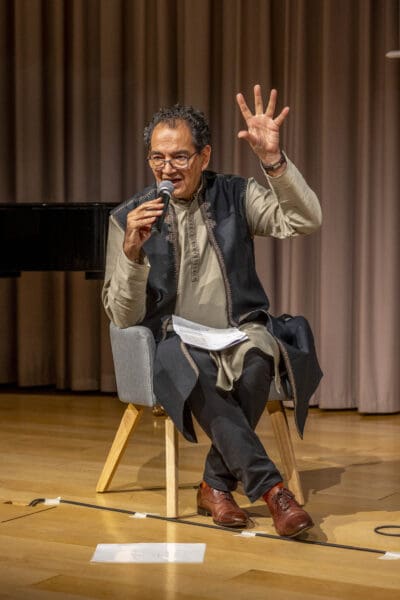
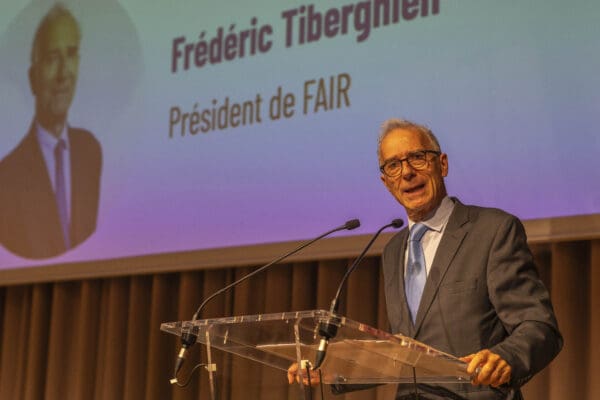
Finally, the sharp eye of Frédéric Tiberghien, President of the FAIR network, masterfully put SIDI’s innovative and sophisticated economic model into perspective in the face of the major challenges facing our societies, here and there.

All of these testimonies, discussions, and sharing feed our commitment and inspire change in favor of a more inclusive and sustainable future.

To see or re-watch these exchanges, visit our
youtube channel
.

And don’t forget to take a look at the
SIDI’s special anniversary booklet
anniversary booklet, an illustrated account of 40 years of innovation at the service of development.

SIDI acquires a majority stake in Inpulse, a management company specializing in impact investment

SIDI is delighted to announce that it has taken a majority stake in the Belgian management company Inpulse Investment Manager, in which it previously held a 35% stake, through the partial buyout of Crédit Coopératif’s shares.

SIDI and Crédit Coopératif, the two shareholders in Inpulse, have decided to invert their respective shares in the company’s capital in order to consolidate it and support it in the development of its impact fund management activities in Europe and the South.

SIDI, more than Crédit Coopératif, has the experience of impact investment, both geographically and thematically (particularly in the financing of agricultural entities), to support development as a majority shareholder in the management company. By remaining a minority shareholder and member of the Board of Directors, Crédit Coopératif is demonstrating its determination to continue supporting the development of Inpulse alongside SIDI, of which it is also a shareholder and long-standing partner, and with which it has developed numerous collaborations in Africa and the Mediterranean Basin, notably within the framework of the FEFISOL and COOPMED Funds.

For SIDI, the strategy linked to this operation is based on 3 axes:

  • Consolidate the funds managed by Inpulse and ensure their economic viability, in particular the FEFISOL II fund, supported by SIDI.
  • Develop synergies between SIDI and Inpulse, notably through geographical complementarity at the operational level, the sharing of experience and best practices on the subjects of impact, social and environmental performance, compliance and the development of institutional relations.
  • Support the development of Inpulse in its efforts to diversify its activities, thanks to a competent team committed to the microfinance and social entrepreneurship sectors, in line with SIDI’s vision and strategy.

SIDI is taking a majority stake in a pioneering management company in the impact sector, with AIFM approval, which will also enable it to continue innovating socially in partnership with other investors and operators in the sector.

In 2023, SIDI celebrates its 40th anniversary!

We've been making history for 40 years already.

It was in 1983 that CCFD-Terre Solidaire took on this formidable project and doubled its innovation by creating SIDI – a player capable of using investment tools to serve its social mission – as well as the first solidarity finance product, the FCP Faim et Développement, in partnership with Crédit Coopératif.

To celebrate this anniversary, we invite you to an event to be held on the afternoon of November 9, 2023, both physically in Paris and also broadcast online.

This event will be an opportunity to celebrate our partnerships in the South, with eight SIDI partners honoring us with their participation. Allies such as Crédit coopératif, the FAIR network and Ethiquable will testify to the relevance of solidarity finance over the past 40 years and in the face of tomorrow’s challenges.

Tomorrow at 2pm, we’ll be marking an important milestone together: SIDI’s 40th anniversary.

The event takes place at the Fondation Biermans-Lapôtre, Cité universitaire internationale, 9A boulevard Jourdan, 75014 Paris.

Doors open at 1:30pm.


To follow the event on video, click here:

SIDI’S 40TH ANNIVERSARY – Solidarity finance facing tomorrow’s challenges

Welcome to the 40th anniversary


Find the complete

here

Sidi 40 rvb

SIDI gets a facelift with a new visual identity

Our visual identity is evolving to better reaffirm our mission as a socially responsible investor.

In this anniversary year – SIDI is 40 years old! – we have decided to adopt a new visual identity, which we are delighted to present to you today.

At the heart of this identity is our logo, a synthesis of the two previous ones: remember the one with the hands tied and the one with our planet.

Created by a young graphic design student, the new logo uses the “S” link to emphasize the link that SIDI forges between shareholders in the North and vulnerable populations in the South, symbolized by the “i “s as two inseparable figures in a whole. SIDI is at the heart of what we call a “chain of financial solidarity”; in this chain, each link is essential and acts at its own level, for the general interest.

The logo features our two historic colors: dark blue and orange, which also marks our natural affiliation with our founding shareholder, CCFD-Terre Solidaire.

Beni Ghreb and Muungano, two SIDI partners nominated for the Grands Prix de la Finance Solidaire!

Every year, FAIR and the newspaper Le Monde organize the Grands Prix de la Finance Solidaire. The prizes are awarded to structures supported by solidarity finance that provide solutions to social and environmental problems. This year, two SIDI partners are nominated in the International Prize category: Beni Ghreb and Muungano. Find out more about them!

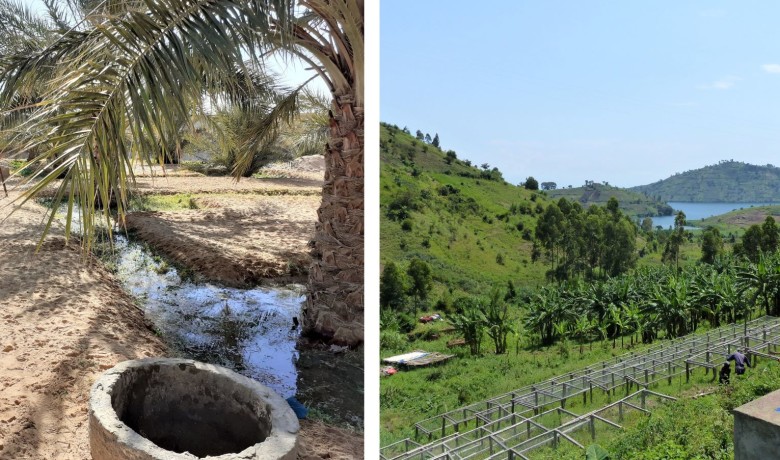
Beni Ghreb is a small company that markets dates produced in the Hazoua oasis in southern Tunisia, on the border with Algeria. It was set up in 2002 in response to the desire of a group of farmers to facilitate the marketing of their produce and increase their income. Beni Ghreb buys all its date production from the Groupement pour le Développement de l’Agriculture en Biodynamie, which groups together 130 families in the oasis. These dates, produced biodynamically (DEMETER certification), are marketed in Europe. The quality of the Deglet nour variety is excellent.

The company provides growers with a technical team that monitors the palms from flowering onwards, and takes care of harvesting. The dates are then sorted, washed and packed in the factory, before being exported to Europe.

Beni Ghreb, a company with a strong social and environmental mission to benefit the inhabitants of the Hazoua oasis. In fact, biodynamic certification enables producers to benefit from a purchase price for their dates that is up to 40% higher than on the conventional market. The company is also one of the main sources of employment for women in the town, mainly the wives and daughters of Groupement farmers. Beni Ghreb’s environmental impact is also very significant. In particular, it has set up a program to regenerate the oasis’ traditional ecosystem based on agroforestry, and has developed sprinkler irrigation systems that save 70% of water consumption.

SIDI entered into a partnership with Beni Ghreb in 2017 to finance date campaigns through annual loans. The partnership will take on a new dimension with the acquisition of a stake in the summer of 2022, enabling BGH to continue strengthening its technical and financial position in the years to come, and thus offer the best possible service to its growers.

In the Democratic Republic of Congo, Muungano is an organic and fair trade coffee cooperative located on the steep shores of Lake Kivu between 1400 and 2600 m altitude. It brings together more than 4,100 members, small-scale family coffee growers, 43% of whom are women.

The cooperative collects and processes the coffee produced in this disadvantaged region of South Kivu, which is highly vulnerable to climate change. Muungano, which means “living together” in Swahili, was created in 2009 as part of a reconciliation initiative to bring together ethnic groups divided by successive conflicts in the region through coffee production. SIDI became a partner of the cooperative in 2015 to finance its agricultural campaign and salutes the extraordinary work accomplished by this cooperative specializing in high-quality gourmet Arabica coffee.

Muungano is a model cooperative in terms of its democratic governance, its social and environmental performance and its economic impact, all in an unstable, fragile and impoverished East Congolese (Kivu) context in terms of living standards and the development of infrastructure and services.

The cooperative employs 25 permanent staff and up to 550 people in high season. In addition to organic certification, Muungano encourages the use of more resilient and soil-regenerating farming practices through training workshops in agoecology, agroforestry and the promotion of mixed cropping-livestock farming. Fair trade premiums are used not only for productive investment, but also to finance community projects. Muungano’s two major achievements are the construction of a small hydroelectric power station that now supplies the entire village of Kiniezire, where the cooperative’s head office is located, and a health center that is currently being finalized and is open to all. Muungano also offers growers a 2nd coffee payment at the end of the campaign. The cooperative also pays a premium to women producers, mostly used to provide them with goats.

Despite the major challenges facing the cooperative, it has been able to resist, progress and supply a highly sought-after gourmet coffee, sold at a better price, which increases the income of the growers and their families. Muungano illustrates the powerful social and environmental impact that an agricultural cooperative can have for its members and for the development of the area in which it operates.

We look forward to seeing you on November 8 in Lille to discover the winners of the Grands Prix de la Finance Solidaire and, in particular, the International Prize.

Further information: Beni Ghreb Muungano agricultural cooperative
View the webinar on partner support

[chapeau]You can watch or re-watch this new edition of Les Témoins en Actes webinar on support, the cornerstone of the solidarity investor’s mission.[/chapeau]

The webinar featured Abdou-Rasmané OUEDRAOGO, Managing Director of Union des Baoré Tradition d’Epargne et de Crédit (UBTEC). UBTEC is a microfinance institution that operates mainly in rural areas of northern Burkina Faso, in the Sahelian zone, while maintaining a strong peasant base thanks to the fact that it was founded by Burkina Faso’s main peasant federation.

SIDI’s General Manager, in dialogue with SIDI’s partnership manager, came to talk about the relationship forged with SIDI to support farmers in the Ecological and Social Transition. Support from the ACTES Foundation has made it possible to finance and support the agro-ecological practices of UBTEC members.

Webinar: Partner support

[chapeau]To strengthen its support for its partners, SIDI has created the ACTES Foundation under the aegis of the Terre Solidaire Foundation. In this new webinar, Les Témoins en Actes focuses on support, the cornerstone of the solidarity investor’s mission.[/chapeau]

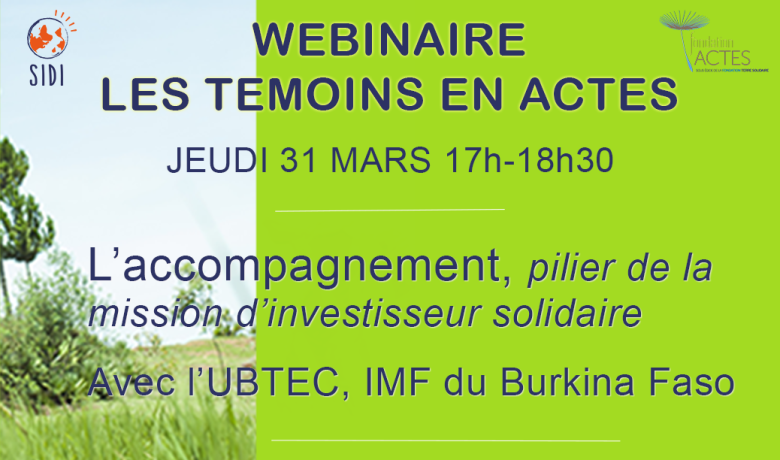
To find out more about the tailor-made support provided by the ACTES Foundation to SIDI’s partners, we invite you to a new ” Témoins en ACTES ” event on Thursday March 31 from 5 to 6.30pm.

This time we welcome Abdou-Rasmané OUEDRAOGO, Managing Director of Union des Baoré Tradition d’Epargne et de Crédit (UBTEC).

UBTEC is a microfinance institution that operates mainly in rural areas of northern Burkina Faso, in the Sahelian zone, while maintaining a strong peasant base thanks to the fact that it was founded by Burkina Faso’s main peasant federation.

The Managing Director of SIDI will give us his account, in dialogue with SIDI’s partnership manager, of the relationship forged with SIDI to support farmers in the Ecological and Social Transition. Support from the ACTES Foundation has made it possible to finance and support the agro-ecological practices of UBTEC members.

1h30 of discussions to better understand the links between SIDI’s investment and support activities, and the challenges it faces in consolidating its support mission with its partners.

Register for the webinar here

The first edition of Les Témoins en Actes webinar welcomed Assata DOUMBIA, producer and president of the ECAM cooperative in Côte d’Ivoire. You can read his testimonial and watch the webinar again:

[CP] EIB lends €5 million to FEFISOL II fund

[CP] European Investment Bank lends €5 million to FEFISOL II to finance Africa’s agricultural sector


Building on the success of FEFISOL, the first impact fund dedicated to the rural world in Africa, which closed in 2021, its two founders, SIDI and Alterfin, have been actively working on the creation of a new fund: FEFISOL II, created at the end of 2021.

Today, the EIB is announcing its entry into the capital of FEFISOL II for an amount of 5 million euros! This renewed commitment will enable the Fund to pursue and deepen its social mission.

FEFISOL 1 has had a considerable impact over the past decade:

– 86M euros disbursed, of which 93% in Sub-Saharan Africa ;

– 75% of average outstandings in local currency ;

– 92 customers financed in 25 countries;

– 139 technical support projects carried out for 51 customers.

FEFISOL II builds on FEFISOL I’s pioneering support for rural microfinance and the agricultural sector. The challenge posed by the lack of financing for rural areas in Africa, and for farmers in particular, remains crucial.

In Africa, less than 5% of loans disbursed by traditional financial institutions are earmarked for the agricultural sector, and less than 10% of farmers have access to credit. And this despite the fact that around 48% of the population depends on agriculture. Although it makes a major contribution to many African economies, the agricultural sector is still poorly served financially, as it is often perceived as too risky or not profitable enough.

Rural communities face multiple challenges: the remoteness of financing, but also the growing risks induced by climate change, as well as the financial inclusion of women, who represent 60% of the agricultural workforce in Africa without often being able to benefit from the same rights as men.

FEFISOL II is structured to provide financial and technical support for solutions designed locally to meet these challenges. FEFISOL II will be implemented in over 25 countries in sub-Saharan Africa, and is expected to support 130 microfinance institutions or agricultural companies and cooperatives sourcing from smallholders and certified fair trade or organic.

Other investors are joining FEFISOL II for a round of financing that will close at the end of March: the first investments will be effective from May!