Back from mission: improving the social and environmental impact of microfinance in Bolivia

Mission Bolivie SIDI IFD Pro - 2025

Each quarter, a member of SIDI's operational team shares with us a mission carried out with partners and their beneficiaries. Cristina Alvarez, Head of Operations in Latin America, tells us about her mission in Bolivia with the microfinance institution Idepro IFD (Institution Financière de Développement). A mission focused on support, the strategic pillar of SIDI's mission.

I went to Bolivia in July 2025 to meet our partners. This time, it was a mission focused on supporting our partner Idepro IFD, a major microfinance institution in the country with over 45,000 borrowers.

It’s a special situation. In May 2024, after a merger, Idepro IFD absorbed our former partner, Sembrar Sartawi. Sembrar Sartawi tended to lend in rural and agricultural areas, whereas Idepro IFD is more rooted in urban areas, in trade and services.

SIDI, already a shareholder in Sembrar Sartawi, encouraged the merger. It remained a shareholder and lender of Idepro IFD, just as it was of Sembrar Sartawi. Our presence, as a supportive institutional shareholder, marks a new departure for the organization, which had previously relied solely on local social entrepreneurs.

At the end of 2024, Idepro IFD begins work on a new strategic plan in which SIDI is involved as a shareholder. The organization defines new mission, organizational and financial objectives.

One of these objectives is to improve the measurement of its social and environmental performance, in order to strengthen the impact that its range of financial products and services has on its customers, their families and the environment. Our discussions gave rise to this support project, designed to help them define a social and environmental performance management strategy, and identify the indicators for measuring it.

At SIDI, one of our main areas of intervention is to specifically support our partners in these areas.

We began working together remotely, with my colleague Ariane Bevierre, in charge of Social and Environmental Performance (SEP). We then organized our mission to coincide with several governance meetings organized by Idepro IFD, including their Board of Directors meeting.

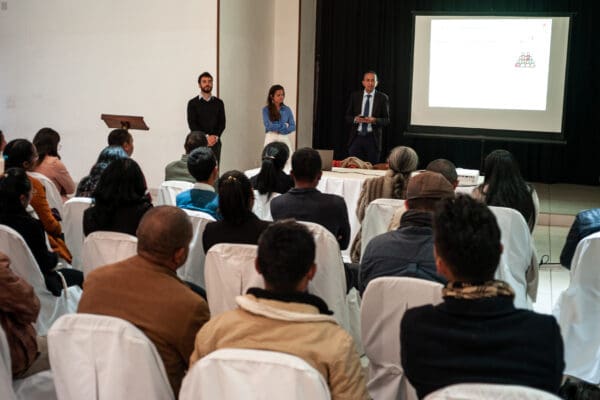
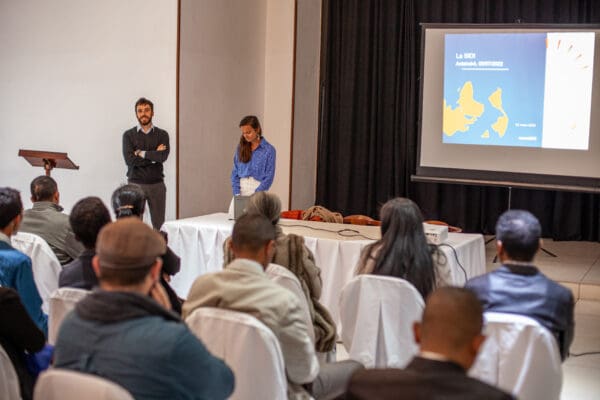
The day after our arrival in La Paz, we take part in the newly created Impact Committee, to present the project prepared with their teams.

For us, it’s always an achievement to be involved in governance bodies and to introduce this new subject to our partners. Sometimes, some people consider social and environmental performance to be a side issue, not a priority.

On the contrary, when we present the project to the Committee and then to the Board of Directors, I’m struck by their interest. How can we go further than defining objectives? How can we concretely measure our social and environmental impact? How can we integrate this with our customers? Their involvement is particularly motivating for us.

Discover their technological innovations

The next day, their Head of Information and Management Systems presented us with an entire project based on data management. We learn that Idepro IFD is in the process of creating a huge database that will enable each of the divisions to feed back their information and identify the processing required for their day-to-day operations.

For my colleague Ariane Bevierre, this is excellent news. The existence of this project is an essential asset for improving the measurement of social and environmental performance, and even for anticipating certain risk situations. For example, to show the fragility of a crop in the face of climate change, and to offer customers training in agroecology so that they can diversify their crops or optimize their water resources.

Visiting customers who benefit from Idepro IFD loans

Over the next few days, we head for El Alto, a town perched at an altitude of 4149 metres! It’s very impressive, with its streets and houses stretching as far as the eye can see. We meet several of Idepro IFD’s customers and discover another facet of its technological advance. Among them is a young woman working in the textile industry. It was thanks to the savings application developed by the institution that she was able to start saving. In Bolivia, most young people have a cell phone, but few have access to banking services. Being able to save every month with her phone proved very practical for her, and she was able to develop a new business thanks to this money. Idepro IFD has thus succeeded in reaching out to a young audience, largely in the informal economy.

Visiting the field, we can clearly see the social impact on loan beneficiaries, with improved living conditions and the ability to save, not just borrow.

But you can’t always be in the field. That’s why helping a partner to monitor its social and environmental performance gives a new dimension to its impact: measuring it, qualifying it and understanding it on a large scale thanks to a structured analysis of its data.

Back in France, my colleague Ariane and I discuss how the mission went. Satisfied with the work we’ve done with governance, we leave motivated to further improve the project thanks to our partner’s contributions. We also look forward to working with partners who can benefit from our feedback.

Interview by Anne-Isabelle Barthélémy


To find out more, go to“Understanding social and environmental performance measurement“.

SICSA, a key player in inclusive finance in Central America

Clients Microfinance (10)

Since 2015, SIDI has been supporting SICSA, a player committed to working alongside microfinance institutions in Central America.

SICSA is a microfinance refinancing institution registered in Panama but with offices in Honduras. Created in 2006 on the initiative of the Central American microfinance network REDCAMIF, it plays a key role in supporting the microfinance sector in Central America. This region, marked by high levels of inequality and chronic political instability, remains one of the world’s most vulnerable to economic and climatic shocks. Microfinance plays an essential role in enabling populations excluded from traditional banking channels to develop a business and strengthen their resilience.

Now active in six countries, SICSA offers a diversified range of financial products and services to some thirty small microfinance institutions (MFIs) in the region. Its added value lies in its ability to act as an intermediary for these MFIs, which are generally not large enough to attract funds from international investors.

By providing financial support to these MFIs, SICSA reaches the most vulnerable populations, helping to reduce poverty through financial inclusion. It focuses in particular on women, young people and rural communities. The aim is to encourage their long-term empowerment by financing income-generating activities such as trade and agriculture.

SICSA attaches particular importance to the quality of its offering and to the satisfaction of its partner MFIs, which is regularly assessed via surveys. It also ensures that these institutions share its social values and ambitions. As a signatory to the Joint Declaration on Customer Protection, it actively promotes best practices in this area. At the same time, SICSA integrates an environmental dimension into its mission by supporting its customers in the development of green financial products.

A strategic and lasting partnership

The partnership between SICSA and SIDI began in 2015 and has grown stronger over the years thanks to SICSA’s stability and social commitment. In 2019, SIDI acquired a stake in the institution, marking a commitment to long-term collaboration. Since then, a SIDI consultant has sat on SICSA’s Board of Directors and taken part in strategic decisions, particularly on social and environmental issues.

In 2022, at SIDI’s instigation, SICSA’s management committee benefited from an awareness-raising session on social and environmental performance. The workshop highlighted good practices already in place within the institution, and highlighted the need to formalize them in order to better leverage their impact.

Following SICSA’s strategic planning for 2023, SIDI offered dedicated support to structure and highlight the organization’s social and environmental commitment. Over the course of a year, SIDI’s PES department worked with the SICSA team to establish a formal framework including social objectives and monitoring indicators. The entire SICSA team was involved in this project, which generated enriching exchanges on the organization’s mission, practices and future ambitions.

Once the objectives and indicators had been defined, in-depth work was carried out on data collection and consolidation tools to ensure effective monitoring of social and environmental performance over the long term. After an initial test of these new tools, and successful data collection by the Sicsa team, the PSE division continued its support by assisting the organization in drawing up their first social report.

A stronger commitment to the future

This dynamic has led to a concrete result: a first social balance sheet that clearly illustrates SICSA’s positioning and social impact in Central America. More than a simple formalization exercise, this work has enabled SICSA to anchor its social and environmental commitment as a central strategic axis of its business.

We are proud to support SICSA in this endeavor and are convinced that this structuring effort will help strengthen its impact in the field. Many thanks to the entire SICSA team for their commitment and vision, and we look forward to continuing this wonderful collaboration!

Vahatra, a new impetus for financial inclusion in Madagascar

A crucial step in our strategic partnership initiated in 2015 to combat rural poverty

For the past five years, SIDI has been supporting the microfinance institution (MFI) VahatraRacines in Malagasy – in its institutional transformation. This year marks a decisive step: its transition from a microcredit NGO to a public limited company (SA) regulated by Madagascar’s banking commission. This change, the fruit of several years’ preparation, will enable Vahatra to consolidate its model and strengthen its capabilities to better serve its 20,000 customers. These beneficiaries, mostly from rural areas between Tananarive, Antsirabé and Ampefy, often live below the extreme poverty line, in a country where 80% of the population subsists on less than US$1.90 a day, and where vulnerability to climate change is one of the highest in the world.

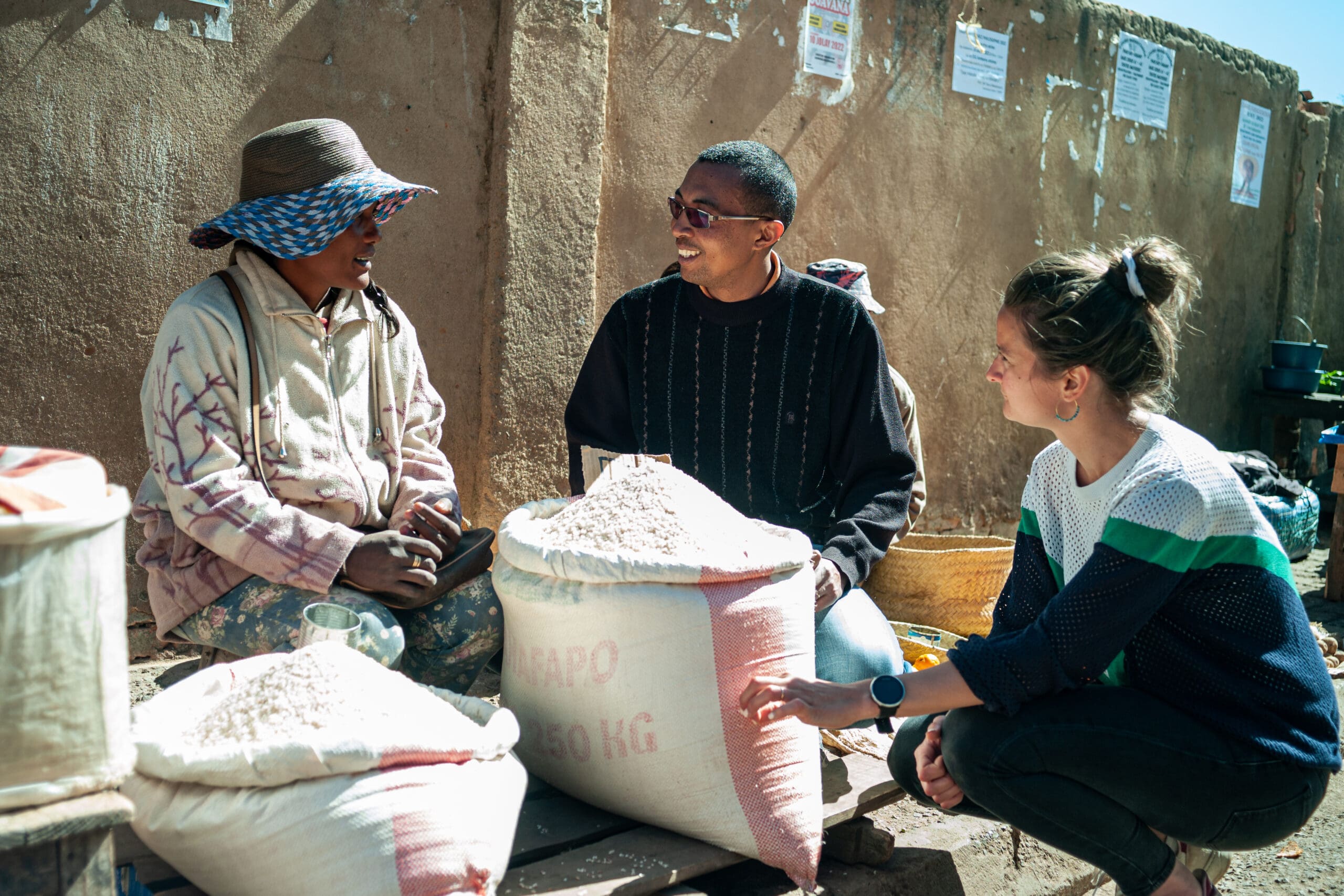
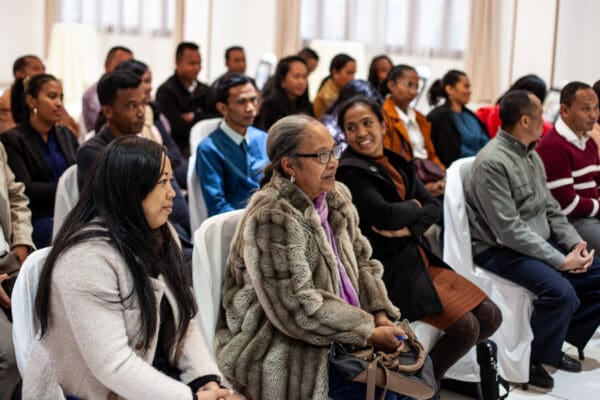
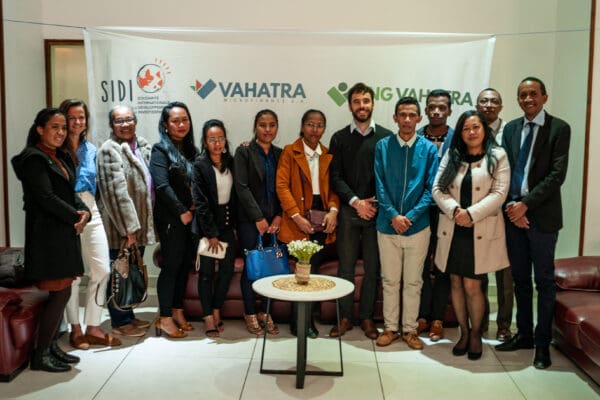
To mark this transition, Joan Penche, SIDI‘s Head of East and Southern Africa, and Gabrielle Orliange, SIDI’s Head of Partnerships for Madagascar, went on a mission to Madagascar. They exchanged views with Vahatra’s teams, visited its rural branches and met a dozen customers to better understand their reality and the services provided by the institution.

Institutionalization: a lever for social and financial impact

Vahatra’s institutionalization represents much more than an administrative change. This process involved a complete transformation: updating information systems, overhauling processes, preparing an approval application to the banking commission, and setting up a new governance structure. SIDI supported this development by providing technical support for the legal process of obtaining approval and the migration to a new information system, as well as strategic support, in particular through the active participation of the partnership officer on the steering committee for this transition.

In order to perpetuate this partnership, SIDI became a shareholder in the newly-created company, with a 23% stake (EUR 130,000), and obtained two directorships. It also continues to support Vahatra through a guarantee enabling the institution to take out a loan with a local bank. This dual commitment reflects the strategic importance of this institution for Madagascan rural development.

A holistic vision to serve vulnerable populations

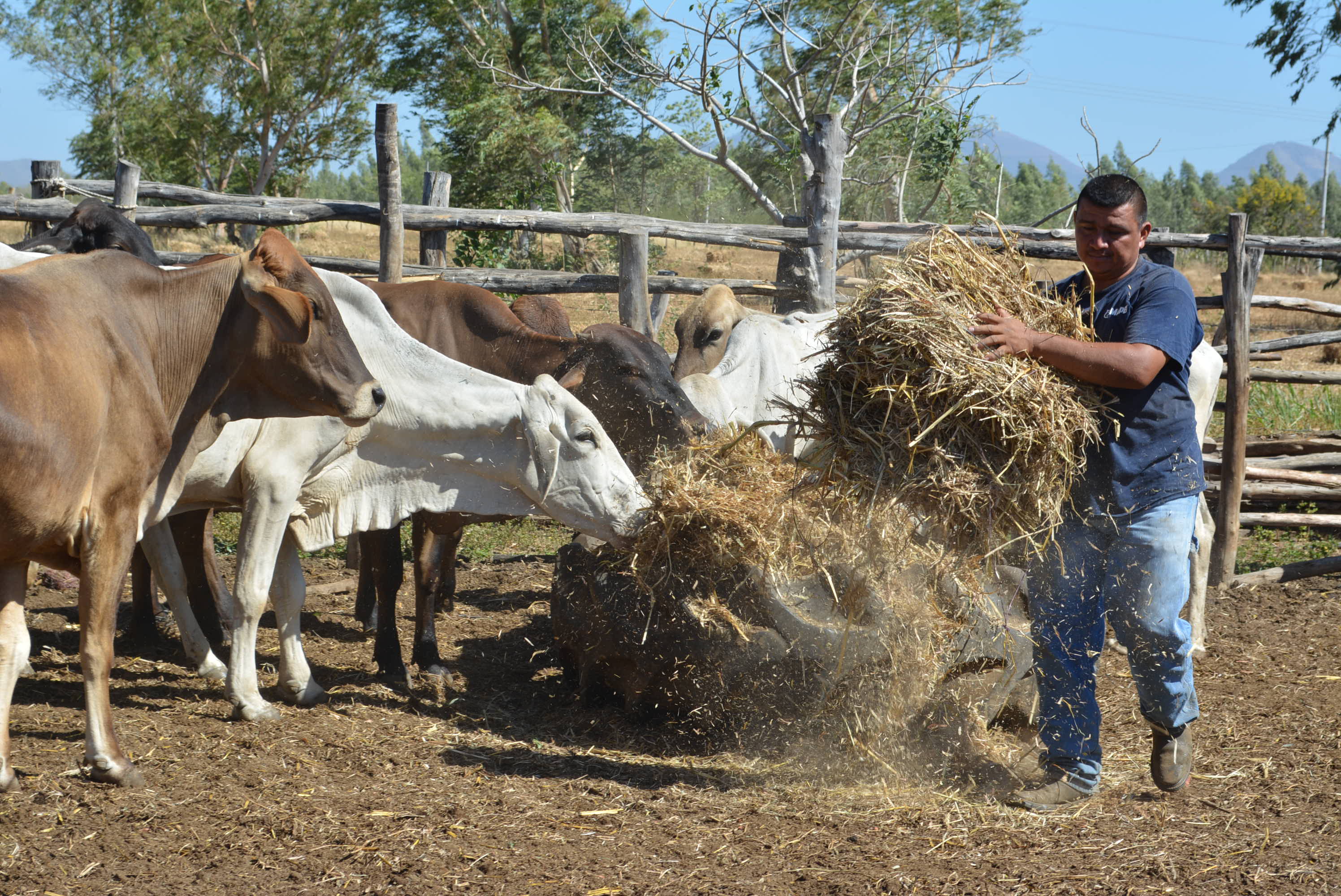
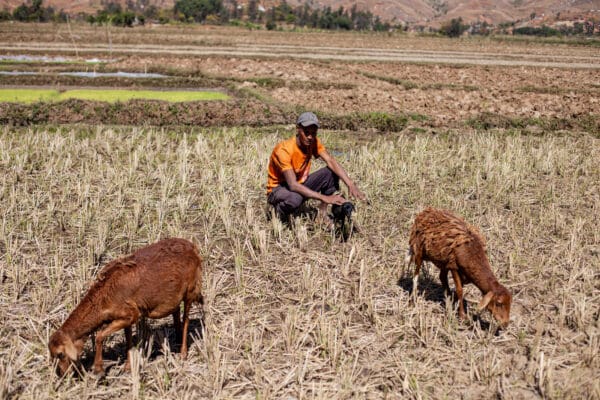
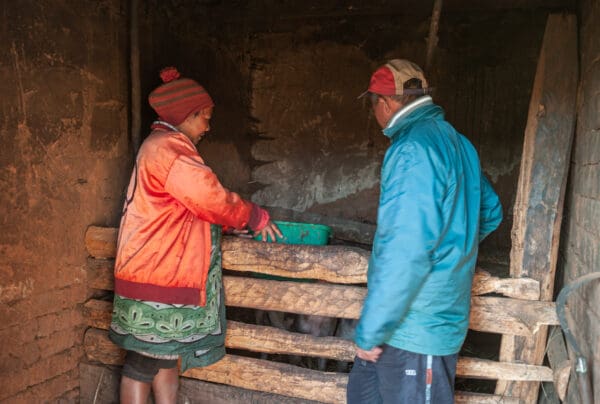
If SIDI is putting so many resources into the transformation of Vahatra, it’s because the partnership with this small MFI has a special meaning. Vahatra stands out for its integrated approach, combining financial services with tailor-made technical and social support for its clients, whom it calls its partners. With extensive experience in agricultural financing, it has developed a lending methodology tailored to the needs of the producers and breeders it finances. In addition to financial services, Vahatra offers technical services and training: for example, Vahatra systematically provides technical assistance to pig farmers receiving financial support (who account for 35% of the MFI’s portfolio) on measures to limit the risk of swine fever. Vahatra has also set up a compulsory mutual health insurance scheme for all its partner clients. This service was developed following the twofold observation that, in the event of an accident, the medical costs involved were often too high for the households targeted by Vahatra: this led them to have to choose between seeking treatment or repaying their loan. The mutual insurer covers the whole household for the duration of the loan. Finally, in line with its developmental vision, Vahatra also offers additional social and environmental services, including awareness-raising sessions on child and maternal health; coaching on obtaining identity papers; and the supply of seedlings from nurseries managed by the MFI. These actions strengthen community resilience while promoting sustainable practices.

Innovative tools to measure impact and limit risk

Social innovation is at the heart of Vahatra’s approach. The institution also stands out for the analysis tools it uses to evaluate and monitor its beneficiary customers. At a time when the microfinance sector is devoting increasing attention to outcome measurement, Vahatra is already ahead of the game. For several years now, we have been using the “family photo”, an analytical grid that measures the multi-dimensional poverty of our beneficiaries through criteria such as housing, nutrition and access to water. This tool also assesses the evolution of customers’ living conditions over several credit cycles.

At the same time, the MFI has developed specific analysis grids for each agricultural sector it finances (pork, rice, potatoes). These tools enable loan officers to identify the risks specific to each operation and propose appropriate solutions. For example, for pig farmers, the grid assesses elements such as feed quality, shelter and access to veterinary care.

A model for the future

Faced with regulatory and operational challenges, the institutionalization of Vahatra marks a strategic turning point. By separating the microfinance activities from the social and healthcare components, the new limited company gains in efficiency while retaining its strong social mission, now carried out by the NGO.

The partnership between SIDI and Vahatra bears witness to the impact that solidarity finance can have on vulnerable communities. By combining technical expertise and human commitment, this project demonstrates that it is possible to reconcile economic viability with lasting social impact. Thanks to this transformation, Vahatra is better equipped to meet the complex challenges of poverty and climate change, helping to build a brighter future for Madagascar’s rural populations.