 Back to the news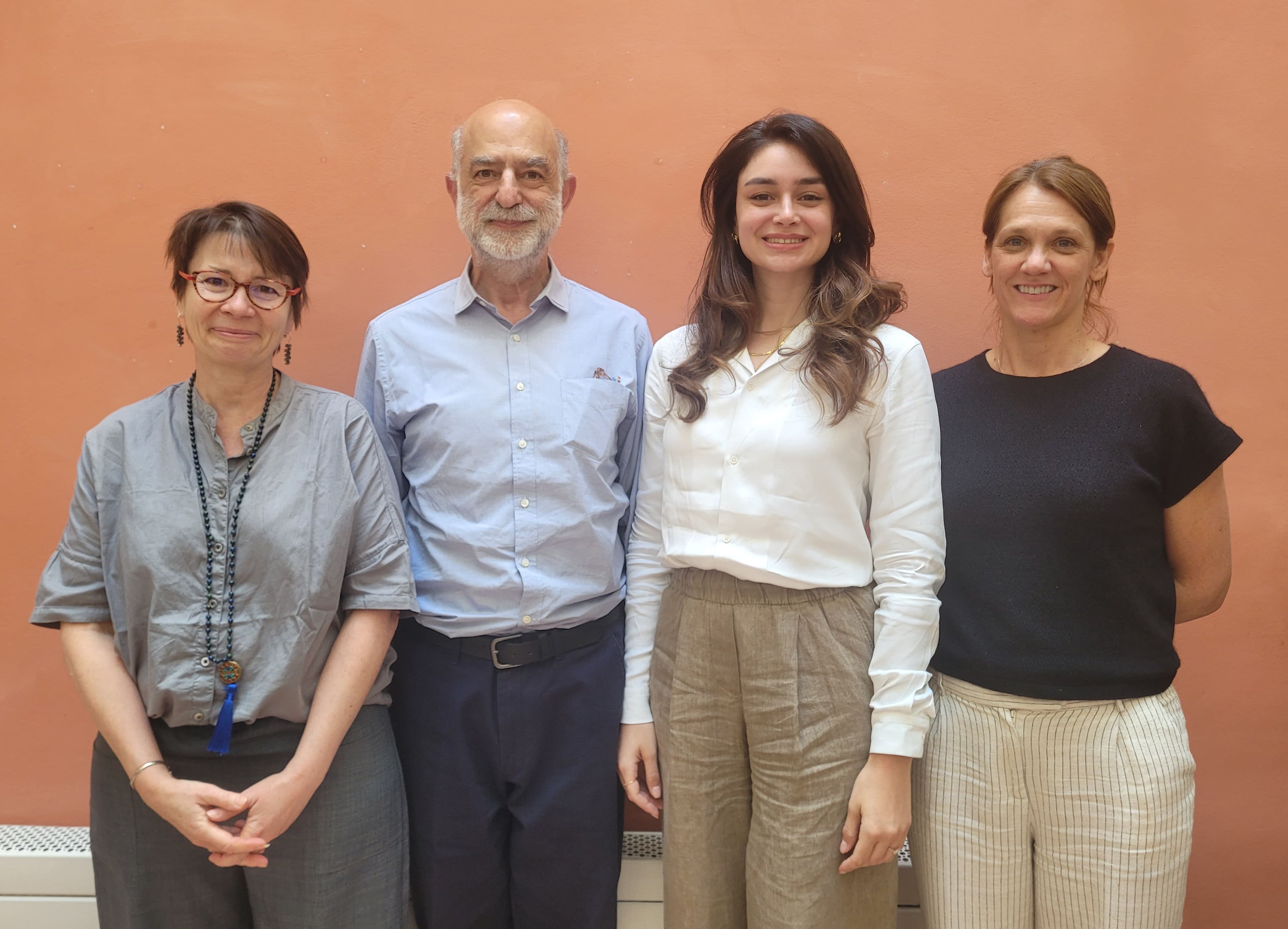
How can a microfinance institution continue its operations when its economic environment is collapsing and the country is at war? At the SIDI General Assembly in June,Al Majmoua’s Executive Director, Youssef Fawaz, reflected on his organization’s journey amid the deep crisis Lebanon has been facing since 2019.
His account sheds light on the very real challenges of keeping a financial institution operational in a country facing a severe economic crisis, the COVID-19 pandemic, and recurring armed conflict. It also illustrates the choices that must be made to continue serving the public.
Al Majmoua: An Institution Dedicated to Helping the Vulnerable
Founded in 1994 by the NGO Save the Children, Al Majmoua has gradually specialized in microfinance, combining financial services with non-financial support.
As its CEO, Youssef Fawaz, points out: “Providing financial services is not necessarily the only way to enable small business owners to grow their businesses and increase their income.” Supporting entrepreneurs—both men and women—is a complementary and essential lever. This mission is perfectly aligned with that of SIDI, which also focuses on a specific approach within the social impact finance sector: financial support that enables partners to grow, and the provision of guidance that helps them build institutional and financial autonomy.
Al Majmoua has become one of Lebanon’s leading microfinance institutions. Its work focuses in particular on rural areas and the most vulnerable populations, especially women and young people, who make up the majority of its clientele.
The organization also supports foreign communities that have been living in Lebanon, in some cases for decades: What they all have in common is that they are engaged in small-scale economic activities. Its mandate is clear: to support anyone “who needs to start an economic activity, whatever it may be.”
A story of survival in the face of “the descent into hell”
Since 2019, Lebanon has been experiencing a major economic and financial crisis, compounded by the COVID-19 pandemic and then the full-scale war with Israel that began in 2024. Against this backdrop, several microfinance institutions have been forced to cease operations.
Al Majmoua was severely affected. Its loan portfolio fell from $45 million to $3 million over the course of four years. Its workforce was reduced by more than half. Despite these immense difficulties, Al Majmoua managed to adapt and partially maintain its operations. Youssef Fawaz described this journey as a “descent into hell”: “It’s a difficult story, but also one of survival, perseverance, and ultimately continuity.”
“Our internal resources weren’t enough”
The institution’s resilience has been facilitated by both internal and external factors. Business continuity depends primarily on internal factors: the team’s ability to adapt, in-depth knowledge of the field, and close, trusting relationships with clients.
It also relies on strong personal commitments and the unwavering loyalty of the staff, some of whom agreed to remain in their positions despite very significant pay cuts, enabling the institution to maintain a minimum level of operations.
But these internal factors alone would not have been enough. “The internal strengths were important, but clearly not enough,” emphasizes the CEO. Al Majmoua’s financial situation quickly became strained, with significant debt and inaccessible cash reserves. In this context, the issue of restructuring became central.
SIDI was the first investor to consider a partial debt write-off, believing that the country’s exceptional circumstances and Al Majmoua’s strong social mission warranted a tailored approach. This position subsequently helped pave the way for a broader restructuring involving all other investors.
The Tariq Akhdar Project: Maintaining the Capacity to Take Action on the Ground
At the height of the crisis, another question arose: How could we continue to support our customers when lending activity had been drastically reduced?
It was with this in mind that the Tarik Akhdar project was launched, led by SIDI and coordinated byADIE. The program was co-financed byAFD and the ACTES Foundation, and carried out in collaboration with another SIDI partner, Fair Trade Lebanon. The project aims to support smallholder farmers in their transition to agroecology. It combines several components: technical training, access to financing through a microcredit line developed with Al Majmoua, and support for product marketing.
For Youssef Fawaz, the project helped maintain momentum in providing support at a time when many entrepreneurs and producers were facing a lack of resources, market opportunities, and prospects. It was a way to keep moving forward despite particularly challenging circumstances.
Continue to ensure the availability of microfinance for communities
This revival remains fragile amid the war. Nevertheless, despite the closure of two of its offices due to the conflict, Al Majmoua has been able to maintain part of its network and continue its operations in other regions of the country. The institution is now seeing a marked improvement in the quality of its portfolio and a gradual recovery in its lending activity to small-scale farmers and microentrepreneurs.
When asked about the outlook, Youssef Fawaz emphasizes the need to keep institutions functioning, even in extremely dire circumstances. After more than twenty years in operation, Al Majmoua has developed the ability to adapt, enabling it to weather prolonged periods of crisis. Sooner or later, the crisis and the war will come to an end. The continued existence of financial institutions such as Al Majmoua is crucial for the Lebanese people, who have had no access to banks since 2018.
As the CEO concludes, maintaining an institution capable of serving 500,000 clients and that has proven its resilience “is worthwhile, both economically and financially.” With this testimony, Al Majmoua reminds us that microfinance is, above all, a story of people, trust, and perseverance.
**The SIDI Model: The Strength of the Patient Investor**
For SIDI and its socially responsible shareholders, this story reminds us of the importance of being a patient investor—one capable of supporting our partners over the long term—and of going “where others won’t go” out of fear of risk.
SIDI has the capacity to take—calculated—risks thanks to the commitment of its socially responsible shareholders. Since its inception, they have asked the organization to prioritize sustainable social impact rather than seek immediate financial returns. SIDI’s operating model also relies on a guarantee mechanism unique to SIDI: the Development Incentive Fund (FID), which is funded by SIDI itself and by some of its founding shareholders. It functions as a safety net for SIDI, helping to absorb shocks and protect partners in times of crisis.
These long-term resources give SIDI the flexibility to go as far as possible in supporting its partners, through good times and bad.